The Western (Wailing) Wall is all that remains of the Jerusalem Temple where Jesus ministered. This wall formed part of the Plaza within the Temple area. King Herod's incredible remodeling project began in 19 B.C. and continued long after his death. It was finally completed only seven years before the Romans came and destroyed the Temple in 70 AD.
The Western (Wailing) Wal
The Western (Wailing) Wall is all that remains of the Jerusalem Temple where Jesus ministered. This wall formed part of the Plaza within the Temple area. It is the most sacred place of prayer in the Jewish world. The below image shows the size of the wall in relation to the entire temple in the red rectangle.
The Western (Wailing) Wall in the Model
The Western (Wailing) Wall is indicated in the red box in the above photo of the Temple model wall. The Wall aboveground consisted of 24 rows of stones of different dressing and age, reaching a total height of 18 m. with 6 m. above the level of the Temple Mount. In 1867 excavations revealed that 19 more rows lay buried underground, the lowest being sunk into the natural rock of the Tyropoeon Valley.
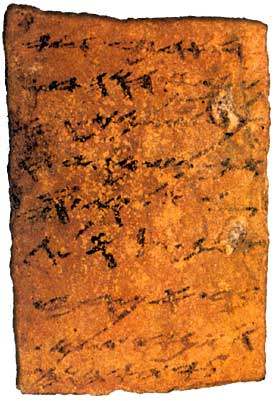
Osctracon from Arad
The above Ostracon is from Arad, the early 6th century B.C. and was inscribed with a letter addressed to Eliashib and mentions "the House of God" in Jerusalem. This is the earliest known reference to the original Temple outside of the Bible.
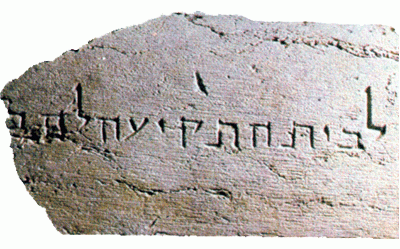
The Place of Trumpeting Stone
The above stone was discovered by archaeologists excavating the Temple Mount area. It is inscribed with the words "To the place of trumpeting" and the photo below is the block of stone.
The above stone was discovered by archaeologists excavating the Temple Mount area. It is inscribed with the words "To the place of trumpeting" and the photo above is the close up.
When Israeli tanks rumble into Jerusalem's Old City in 1967, it was the first time (except for a brief moment in 135 AD) that the Jews actually controlled the site since 70 A.D.
Bar Kochba Coin
The above coin was struck by Bar Kochba, the leader of the Jewish revolt against the Romans in 132 A.D., it reveals the entrance to the Holy Place within the Temple.
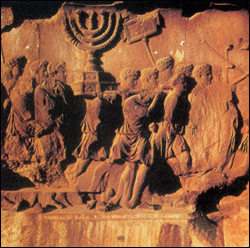
Arch of Titus Frieze
This frieze above is from the Arch of Titus in Rome and depicts the triumphant Roman soldiers carrying off the seven-branched menorah and other spoils captured from the Temple in Jerusalem. It reveals the dreadful crushing of the Jewish revolt in 70 A.D. by Titus.
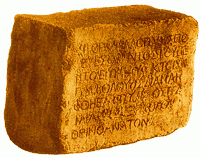
Temple Warning
Josephus the Jewish historian wrote about the warning signs that were on the barrier that separated the court of the gentiles from the other courts in the Temple. Not until recent times did archaeologists actually discover one. Its seven-line inscription read as follows:
NO FOREIGNER IS TO GO BEYOND THE BALUSTRADE AND THE PLAZA OF THE TEMPLE ZONE WHOEVER IS CAUGHT DOING SO WILL HAVE HIMSELF TO BLAME FOR HIS DEATH WHICH WILL FOLLOW
Korban Inscription
Cast of the top of a stone vessel incised with two doves and the Hebrew word "Korban" (Sacrifice). Found in excavations at the wailing wall, Jerusalem, Herodian Period. The Israeli Museum, Jerusalem.
Menorah and other Temple Implements
Incised on plaster of a house wall found in the Jewish quarter of old Jerusalem. Herod’s time (40-48 A.D.) The Israel Museum, Jerusalem.
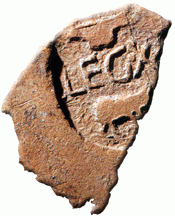
Roman Legion Inscription
Tile inscribed with "Legio X Fretensis" – the name of the Roman legion which destroyed Jerusalem. Studium Biblicum Franciscanum, Jerusalem.
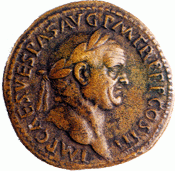
Emperor Vespasian Coin
"Judea Capta" coin with head of Roman Emperor Vespasian. Struck in 71 A.D. following the crushing of the Great Revolt against the Romans and the destruction of the Temple. The Israel Museum, Jerusalem.